
In April of 1999, our journey began with a 17-foot piece of American history—a 1967 Airstream Caravel. We became its proud fourth owners, taking the torch from a University of Georgia Fine Arts instructor who had appreciated its classic lines. But the true soul of this vintage trailer unraveled like a detective story, hidden right inside its own aluminum walls.
Tucked away in a corner of the cabin, we discovered a single, weathered old parts receipt. That receipt gave us the name of the second owner. When we tracked him down, he shared fond memories of how he and his wife had spent years touring across the vast landscapes of the country in the Caravel. He also filled in the final blank of the trailer’s origin story: he had bought it directly from the original owner—a high-flying fighter pilot stationed at Nellis Air Force Base near Las Vegas who flew F-4 Phantoms who bought it new.
The physical proof was right there on the aluminum skin: a vintage dealership sticker that read “95 TRAILER SALES, located on Hwy 95 in Las Vegas.” In the mid-1960s, that gleaming trailer was almost certainly the pilot’s off-base “love shack,” parked under the wide desert skies of Nevada.
He hadn’t skimped on the options list either. This Caravel was ordered as a top-tier premium build, outfitted with the exclusive International Package. It featured a built-in water filter, a 12v/110v combo lighting system, and a dedicated water pump switch. The pilot also checked the boxes for a propane light, a TV antenna, a radio antenna, and a factory Armstrong air conditioner—which, incredibly, was still blowing cold air the day we brought the trailer home thirty-two years later.
Owning a 1967 Caravel means owning a genuine rarity. Airstream only built this specific model during a highly limited production run of just three weeks per year. In 1967, it carried a premium price tag of $4,245.00—a massive luxury expense at a time when a brand-new 1967 Ford Mustang cost just $2,461.00.
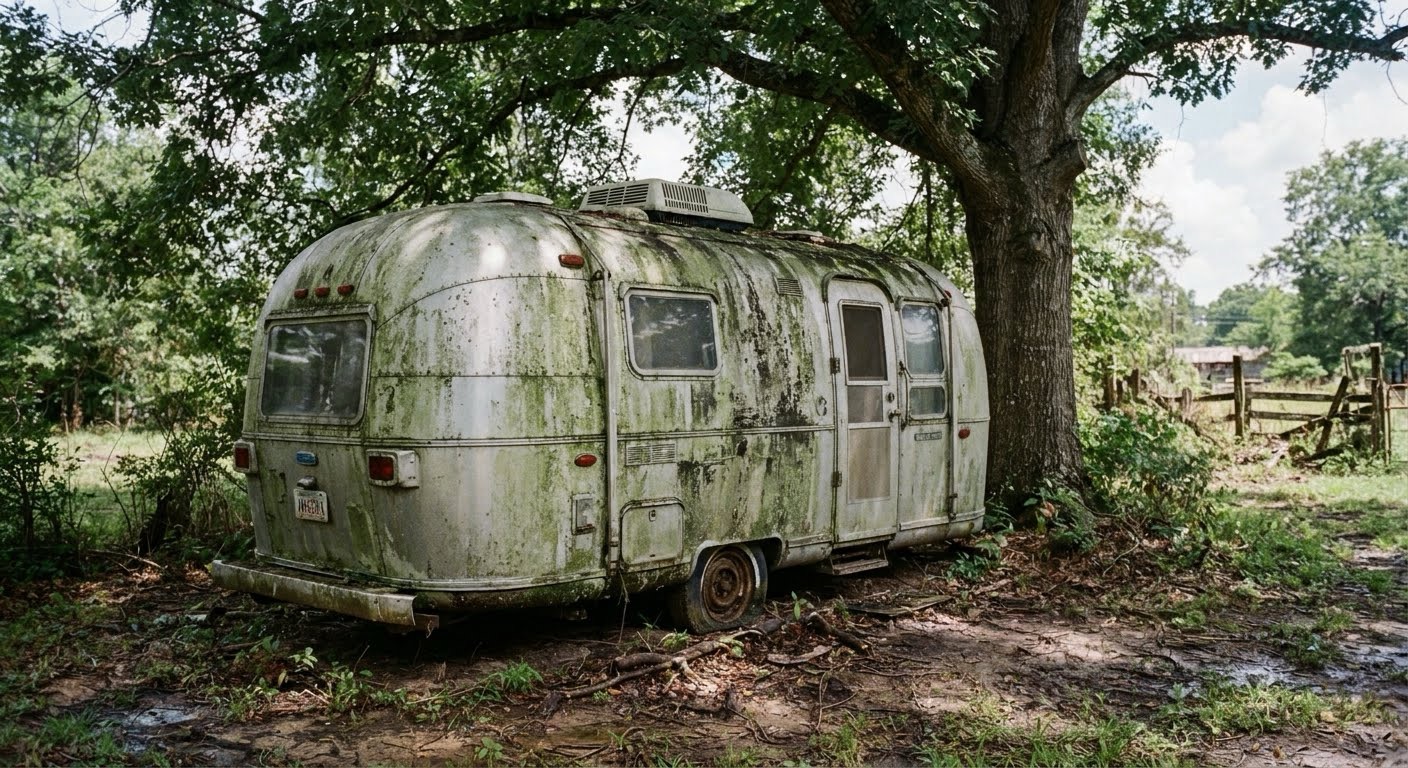
Yet, when we first laid eyes on it, that luxury past felt a world away. The “as found” condition was a staggering test of faith. The trailer had been sitting abandoned under a dense canopy of trees in Athens, Georgia, for about eight years. It was completely cloaked in a thick layer of green mildew inside and out. The original upholstery was still intact, but the cabin was entirely occupied by what seemed like thousands of ants, alongside unmistakable evidence of other critters. Before a single tool could be lifted or a hand could touch the interior, the entire shell had to be thoroughly bug-bombed just so we could start working.
The timing of the purchase was driven by a deep, protective purpose. At that very moment, my wife was fighting her way through aggressive chemotherapy treatments following five intensive cancer surgeries. With her immune system completely compromised, I bought the trailer with a clear promise, telling her I was creating a perfectly sterile, “germ-free” environment of our own so she would never have to risk staying in poorly cleaned hotel rooms during her recovery.
She took one look at the mildew-covered, ant-infested shell and flatly declared, “I’m not setting foot in that thing!”
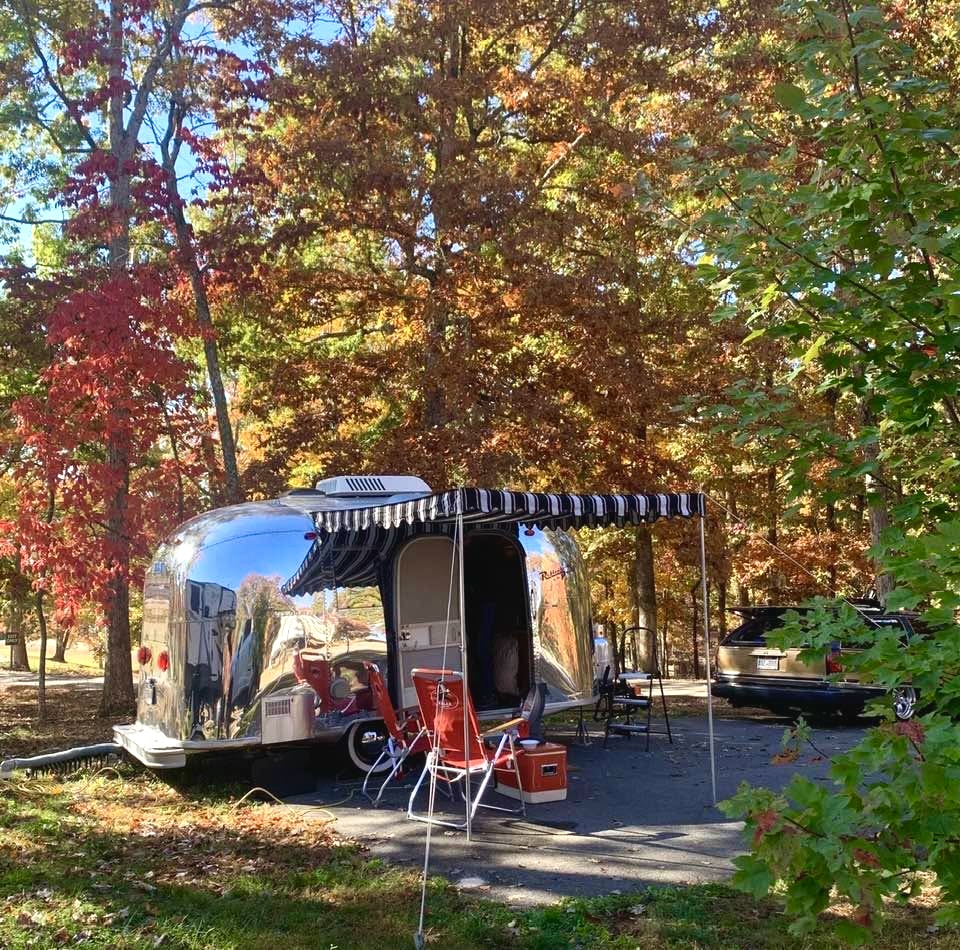
She loves it now, though. For nearly three decades, we have dedicated ourselves to a continuous cycle of thoughtful upgrades and careful refurbishments, but the trailer has never undergone a full, sterile restoration. It remains beautifully authentic. It proudly retains 98% of its original interior wood, its factory countertops, the original bathroom, and the vintage Delta shower head that the F-4 pilot once used.
Over the years, we have rolled up our sleeves to keep the trailer road-worthy and safe. We’ve replaced some of the plumbing lines and fixtures, repaired a partial section of the subfloor, laid down new flooring, and updated various hardware pieces. To ensure modern comfort and safety on the highway, we also updated the heat and AC system, the refrigerator, the propane tanks, the water heater, and completely swapped out the axle for a brand-new unit fitted with fresh electric brakes.
Through all of it, our nimble Caravel has carried us across 14 states, tracking flawlessly behind a unique and rugged variety of classic American horsepower. Over the years, we have proudly towed it down the highway with a ’51 Ford F1 truck, a ’72 Chevy C-10, a ’77 Chevy custom, a one-off custom ramp truck, and two different Buick Roadmaster Estate Wagons. We are now rapidly nearing our 28th year of loving, maintaining, and enjoying our Airstream—and we look forward to spending many more miles chasing the horizon in our rolling piece of family history.