
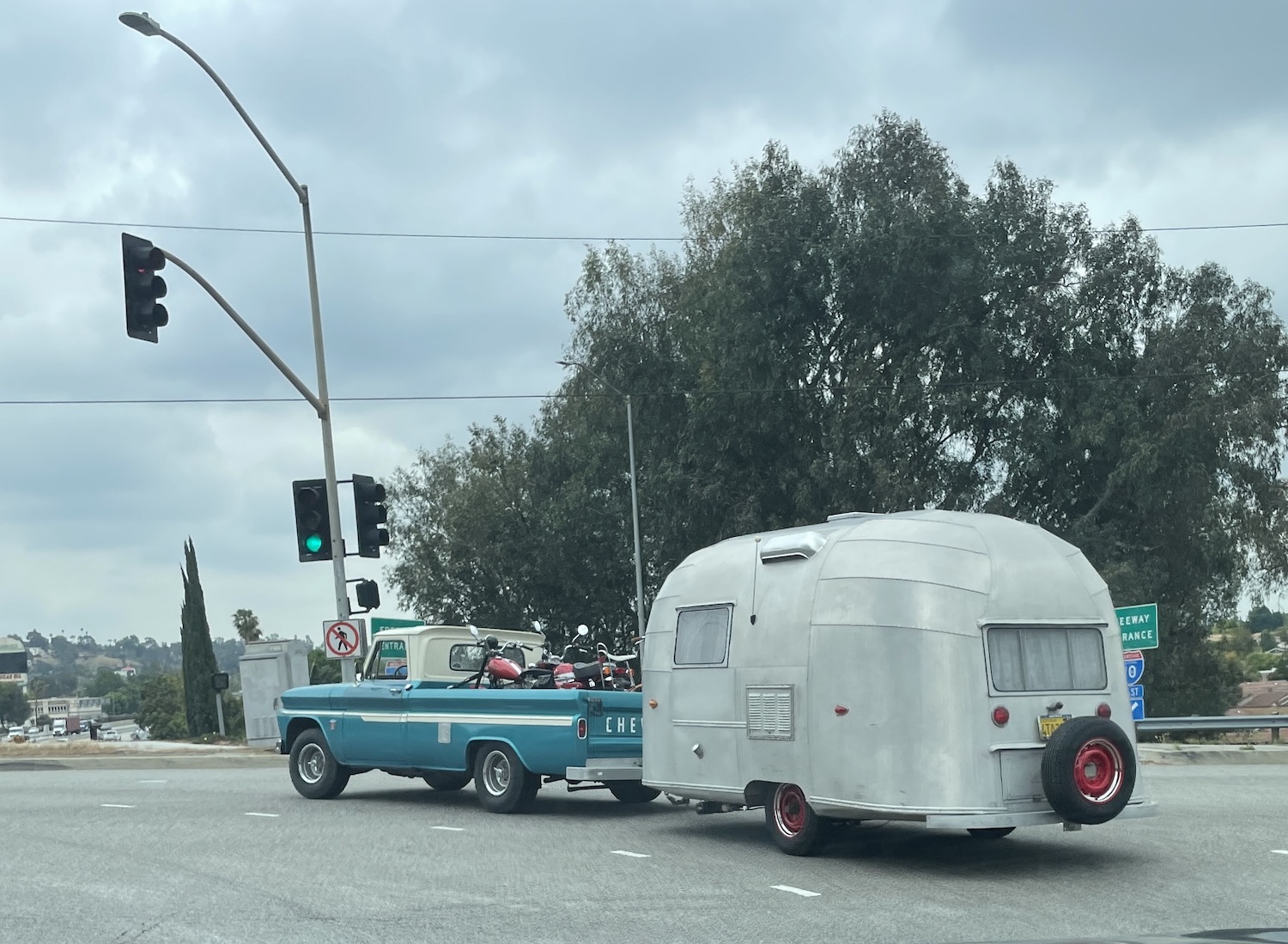
Whether you’re pulling a 1959 Shasta or a brand-new travel trailer, these fundamentals don’t change
—
There’s something deeply satisfying about hitching up a vintage trailer and heading down the road. The chrome gleams, the rounded corners catch the light, and for a moment you feel connected to every road tripper who came before you.
But here’s the thing about those original trailer owners from the 1950s and ’60s: they were serious about towing. They checked their equipment, they understood weight, and they drove with patience and care. That tradition of doing things right is part of what makes this community so special — and it’s why these timeless towing basics are worth revisiting before every trip.
Whether you’re a seasoned vintage trailer enthusiast or you just picked up your first canned ham, these fundamentals apply to every rig, every road, and every season.
—
1. Know Your Numbers Before You Go
The foundation of safe towing is understanding four numbers: your tow vehicle’s tow rating, your trailer’s Gross Vehicle Weight Rating (GVWR), your tongue weight, and your payload capacity.
Your tow vehicle’s tow rating is the maximum your truck or SUV can pull — but that’s not the whole story. Your payload capacity (found on the sticker inside your driver’s door) tells you how much total weight your vehicle can carry, including passengers, cargo, and tongue weight. Many people max out their tow rating but forget they’ve already eaten into their payload with gear, passengers, and a heavy hitch.
A good rule of thumb: keep your tongue weight between 10–15% of your total trailer weight. Too little and the trailer can sway; too much and your front wheels get light and steering suffers.
For vintage trailers, getting a current weight at a truck stop scale is worth the few dollars — older trailers often have undocumented modifications, added insulation, or vintage appliances that change the actual weight from what the tag says.
—
2. The Pre-Trip Hitch Check Takes Five Minutes — Do It Every Time
Before you move the vehicle an inch, walk through this sequence:
- Hitch ball is the correct size and torqued tight (loose hitch balls are more common than people think)
- Coupler is fully seated and latched — no rocking side to side
- Safety chains are crossed in an X under the coupler and have enough slack to turn but not drag
- Breakaway cable (if equipped) is clipped to the tow vehicle — not the ball mount
- Trailer plug is fully seated and all lights are working (brake lights, turn signals, running lights)
- Stabilizer jacks are fully retracted
- Nothing is hanging, dragging, or propped against a wheel
This checklist sounds obvious, but it’s the kind of thing experienced towers rush through after years on the road. Most roadside trailer incidents — dropped trailers, swaying emergencies, failed lights — trace back to something in this list.
—
3. Sway Happens — Here’s What to Do
Trailer sway is one of the most alarming things a tower can experience, and it’s also one of the most preventable. The causes are almost always the same: too little tongue weight, overloaded rear of the trailer, driving too fast for conditions, or getting buffeted by a passing semi.
Prevention comes first: load your trailer so heavier items are forward and low, keep speed under 65 mph (slower in crosswinds), and give semi trucks wide berth when they pass.
If sway starts: do NOT brake suddenly and do NOT try to steer against it. Hold the wheel firmly and straight, ease off the accelerator gradually, and let the trailer settle. A sway control device adds an extra margin of safety for longer or older trailers that may flex more than modern rigs.
Vintage trailers can be particularly susceptible to sway if their suspension has softened over the decades or if the tongue weight wasn’t designed for modern speeds. A weight distribution hitch, combined with a sway control bar, makes a meaningful difference.
—
4. Back It Up: The One Skill That Takes Practice
Backing a trailer is a skill, not an instinct — and there’s no shortcut except repetition. The basic rule is that your hands go in the direction you want the back of the trailer to go. But the real skill is recognizing when to pull forward and reset before you’ve gone too far.
Before you back into a campsite or driveway, take 30 seconds to walk the path. Note any obstacles, low branches, or slope changes. Then take it slowly — you have time, and backing up an inch too far is always better than a foot too far.
If you’re new to backing, an empty parking lot on a Sunday morning is the best classroom. Set up cones or use parking space lines as targets and practice until it feels natural. The Tin Can Tourists community on the road is wonderfully generous — don’t be afraid to ask a fellow enthusiast to spot you.
—
5. Maintenance Is Respect for the Road
Vintage trailers require extra attention to a few specific areas:
Wheel bearings: These should be inspected and repacked annually, or every 10,000–12,000 miles. Bearing failure is one of the leading causes of trailer wheel-off incidents. On older axles, this is non-negotiable.
Tires: Vintage trailer tires are often under-rated for modern highway speeds. Replace any tire over six years old regardless of tread depth — the sidewalls deteriorate from UV and ozone even when the trailer is stored. Check cold inflation before every trip.
Lights and wiring: Original vintage wiring is often corroded, spliced, or simply aged out. A fresh LED rewire is one of the best investments you can make in safety and reliability, and it doesn’t change the character of the trailer at all.
Brakes: If your trailer has electric brakes, test the brake controller before every trip. If the controller hasn’t been calibrated recently, take a few stops in an empty parking lot and adjust the gain until the trailer brakes apply smoothly without locking up.
—
A Final Word
The vintage trailer community keeps alive something that’s increasingly rare: the idea that you learn your equipment, you maintain it with care, and you take responsibility for your rig on the road. These towing basics aren’t just safety tips — they’re part of the ethos that makes events like Route 66 caravans so special.
If you want to go deeper on any of these topics, TowProAcademy.com offers an Class C trailer towing course covering everything from hitch setup to backing technique to state towing laws — written specifically for everyday people towing personal trailers.
Here’s to many more miles of open road, chrome bumpers, and vintage aluminum.
—
Jeff McDonough
Founder, TowProAcademy.com
Thanks you for the insight on something we all think we know. Before picking up my 1969 Shasta 20 ft tandem five years ago I rode motorcycle for 30 years and took the basic rider course every three years, I think its a good idea to do the same with basic towing knowledge.
Thank’s for the update & info. A simple reminder is always useful and well needed. I will review this article before we hit the road, just to be safe. Again, Thank You.
On e more thing…buy and use the most durable hitch lock on the market. Every time you unhitch your trailer from your tow vehicle, put it on. Buy a monster hitch lock or there are also wheel locks available.
This will save you a lot of grief on the road, in a RV park or if your trailer is in storage.